
Using Simulation To Understand PV Systems
In this article, we'll discuss how CircuitLogix can be used to illustrate key concepts in the solar technician program from George Brown Polytechnic. We'll begin our examination with a quick overview of what circuit logics is. We'll then move on and describe how circuit logics is being used in the solar technician program.
What is CircuitLogix ?
CircuitLogix is a schematic capture and simulation tool. It allows a student to build a wide variety of applications including analog, digital, and mixed mode electric circuits. Once constructed, these applications can be simulated. The application's behavior can then be examined using an extensive suite of analysis tools.
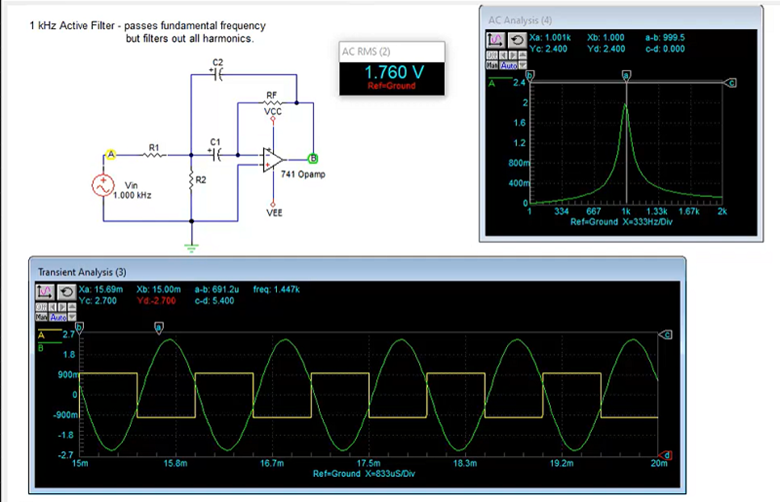
A transient analysis can be run on this filter to illustrate the square wave input and the resulting sine wave output on a scope display. An operating point analysis can be included to display steady state values around the circuit. A frequency sweep analysis can be run illustrating the filter's frequency response. As can be seen, circuitLogix is a powerful simulation tool. It can be used to illustrate many aspects of a circuit's behavior.
How is CircuitLogix Used In The Solar Technician Program ?
Now that we have a basic understanding of what CircuitLogix is capable of, we'll examine how the simulation tool is being employed with the Solar Technician program. We'll be using CircuitLogix to illustrate the operation of solar applications by simulating the individual system elements and devices. This would include converters, charge controllers, inverters, solar panels and arrays along with other system related devices. These elements and devices will be examined in one of two general ways or at two different levels of detail.
1. Discrete Component Level
First, we'll take a discrete component level view of some of the devices. In this example, we're illustrating a buck boost converter. The converter is being used as a bidirectional battery charger.
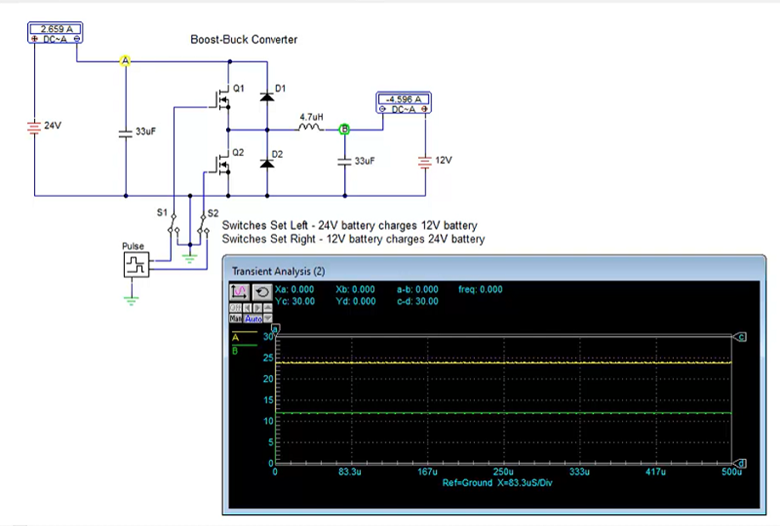
With the switches set to the left, the 24 volt battery is charging the 12 volt battery as illustrated by the ammeter readings. By simply toggling the switches to the right, the 24 volt battery can be charged by the 12 volt battery and the ammeters show that current now flows in the opposite direction.
2. System Element Level
In addition to the granular discrete component view, CircuitLogix is also capable of illustrating applications from a systems level view. A variety of devices and system elements have been modeled with this approach in mind. In this example, two solar panels are being used to charge a 48 volt battery. Using circuit logics, we can examine this behavior under regular sunny conditions as seen here.
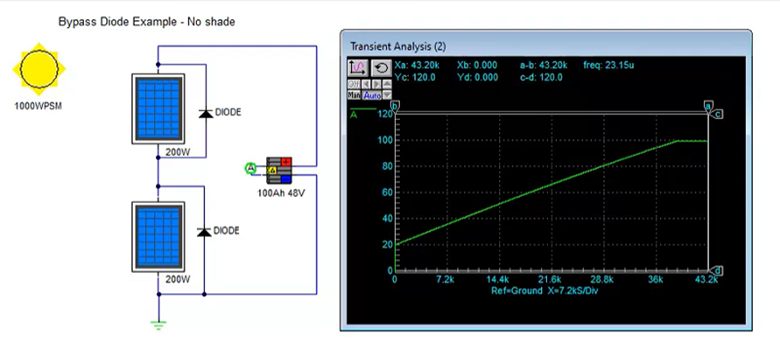
CircuitLogix is an exceptional tool for illustrating such differences in behavior. As students become familiar with the various pieces of equipment used in solar systems, circuit logics provides an environment where behaviors and aspects of those circuit elements can be observed and tested. In this way, the individual building blocks of the system can be examined. These individual elements and devices can then be put together into complete systems such as the off-grid solar system in this example. This system level example illustrates the moment when the sun is setting of is shaded. When the output voltage from the solar array falls below 200 volts in this example, the automatic transfer switch switches the source of power from the panels to the battery bank. Using this level of abstraction, system topologies are easily differentiated.
Here we have a grid tied version of the application performing this same operation. When the sun starts setting, power is transferred from the solar array to the grid. This application is also capable of returning power to the grid.
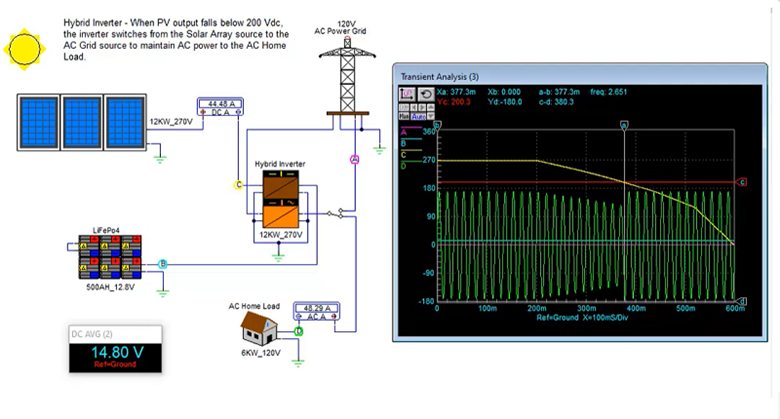
The above illustration as well as the previous examples given, CircuitLogix is an invaluable tool when it comes to illustrating device behavior under varying conditions. A wide variety of coupling techniques as well as system topologies are illustrated with this flexible and powerful simulation tool. CircuitLogix is included as part of the Solar Technician Program offered from George Brown Polytechnic.
CircuitLogix gives students the opportunity to safely explore how PV systems respond under different conditions before working with real equipment in the field. By combining hands-on simulation with practical theory, students can build a deeper understanding of solar components, system behavior, and troubleshooting techniques. To learn more about the George Brown Polytechnic Solar Technician Program, call us toll-free at 1-888-553-5333 or email us at [email protected]